A name deserves more than a place in a decorative heading.
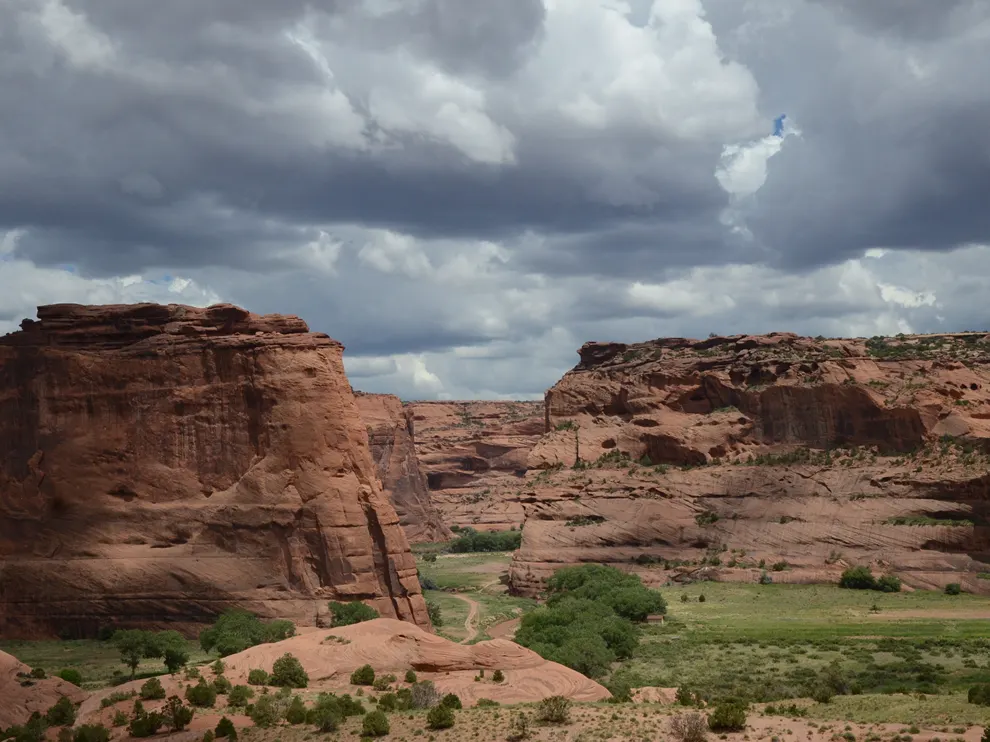
In its introduction to Canyon de Chelly, the National Park Service uses Diné when describing the families who live there, and Tsegi when naming the place. This journal keeps those names visible rather than replacing every reference with a broad cultural label.
Learn from a speaker, not a decorative font
For someone beginning a language, seeing a word on a page is only a first step. We suggest looking for material made by speakers and language educators, listening to pronunciation, and checking the context in which a word is used.
A useful notebook records the source beside the word. It can also record what remains uncertain: pronunciation, spelling, meaning in a particular sentence, or whether a term is appropriate for the situation. Those uncertainties are part of learning, not a reason to invent a translation.
Why these notes are in English
These are English-language reading notes with Navajo names retained in context. They are not a Navajo-language course or a translation of a community's account. Where our knowledge is limited, the better next step is to direct the reader to people and institutions who can speak for themselves.
Our reading room is a starting list, not a substitute for a teacher. Follow a source, keep its attribution, and return to it when a name needs more explanation than a short caption can provide.