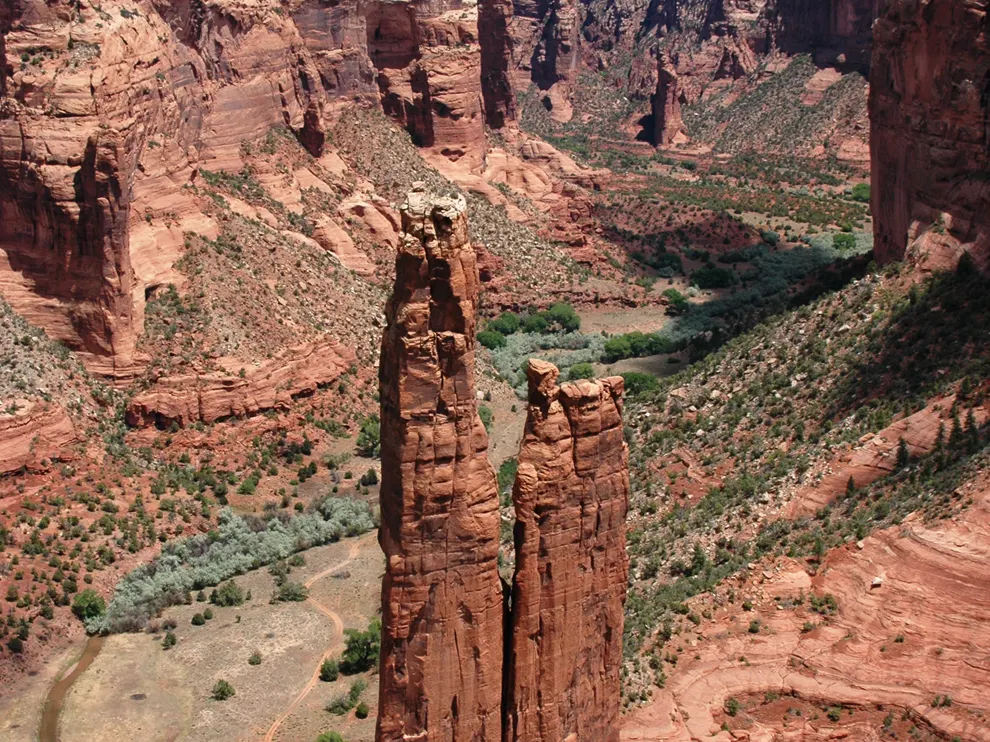
Before looking at a canyon as a view, try reading it as a place where people live.
The National Park Service introduces Canyon de Chelly through its Diné families: people who live in the canyon, raise livestock and grow crops. The park describes a place called Tsegi and a present-day partnership between the park and the Navajo Nation.
That is a useful starting point for a reading notebook. A photograph can make a landscape seem unoccupied. A short caption can restore something of the human context that the frame leaves out.
Read beyond the overlook
The striking rock formations are an invitation to look. They should also be an invitation to learn whose place this is, how it is described by its residents, and which sources a visitor is relying on.
In these notes, the image is an opening rather than a complete account. Pair it with the park's own introduction. Follow the links to the Navajo Nation. If you are planning a visit, use current local guidance rather than treating an old photograph or a journal essay as travel advice.
Leave a little room in the notebook
A good note can end with a question. What does the photograph leave outside its borders? Who supplied the place-name? What would need to be understood before writing more? Keeping those questions visible is one way to avoid turning a living place into a backdrop.